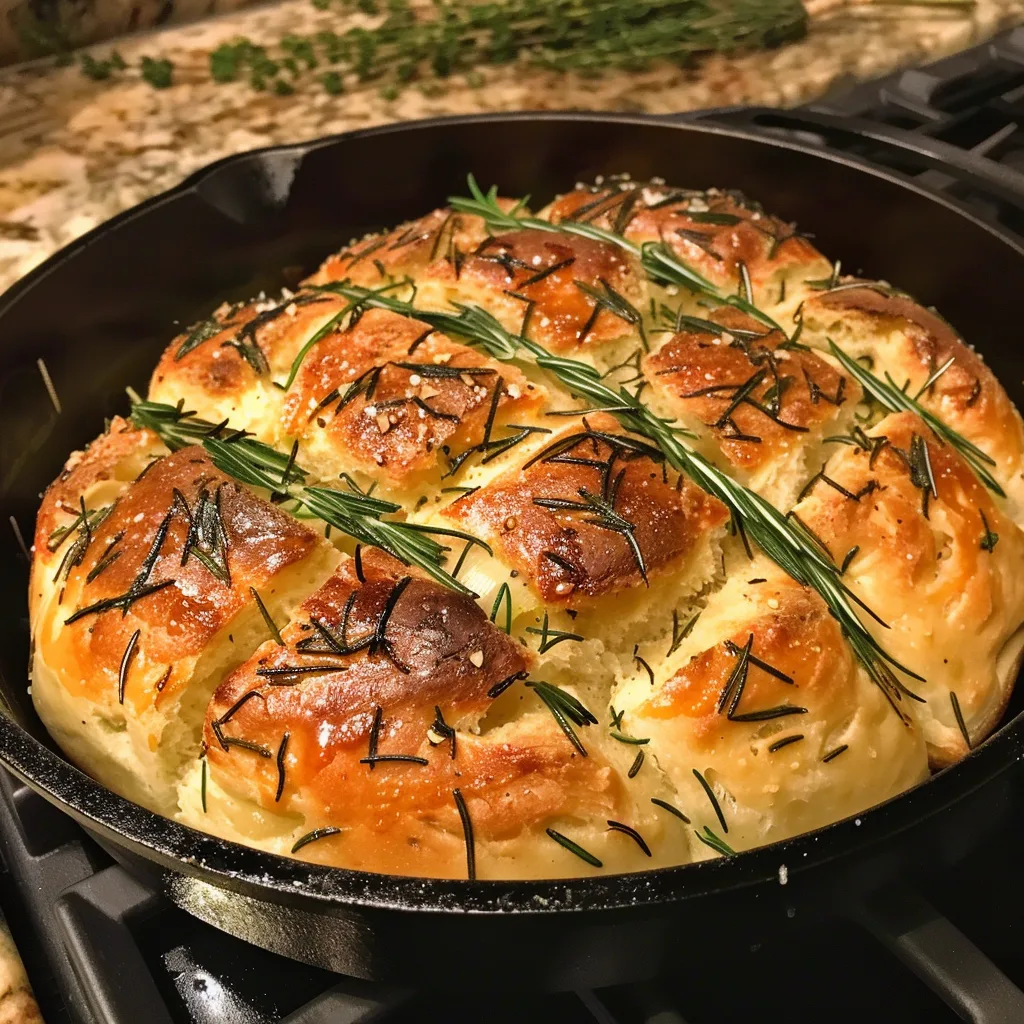
There’s something magical about pulling a golden loaf of garlic rosemary bread out of a hot skillet. The crust crackles, the steam escapes, and the fragrance of herbs fills the kitchen. Unlike store-bought bread that often feels bland and uniform, a rustic loaf with garlic carries charm, personality, and an artisan touch that’s hard to beat.
Why This Skillet Bread Stands Out
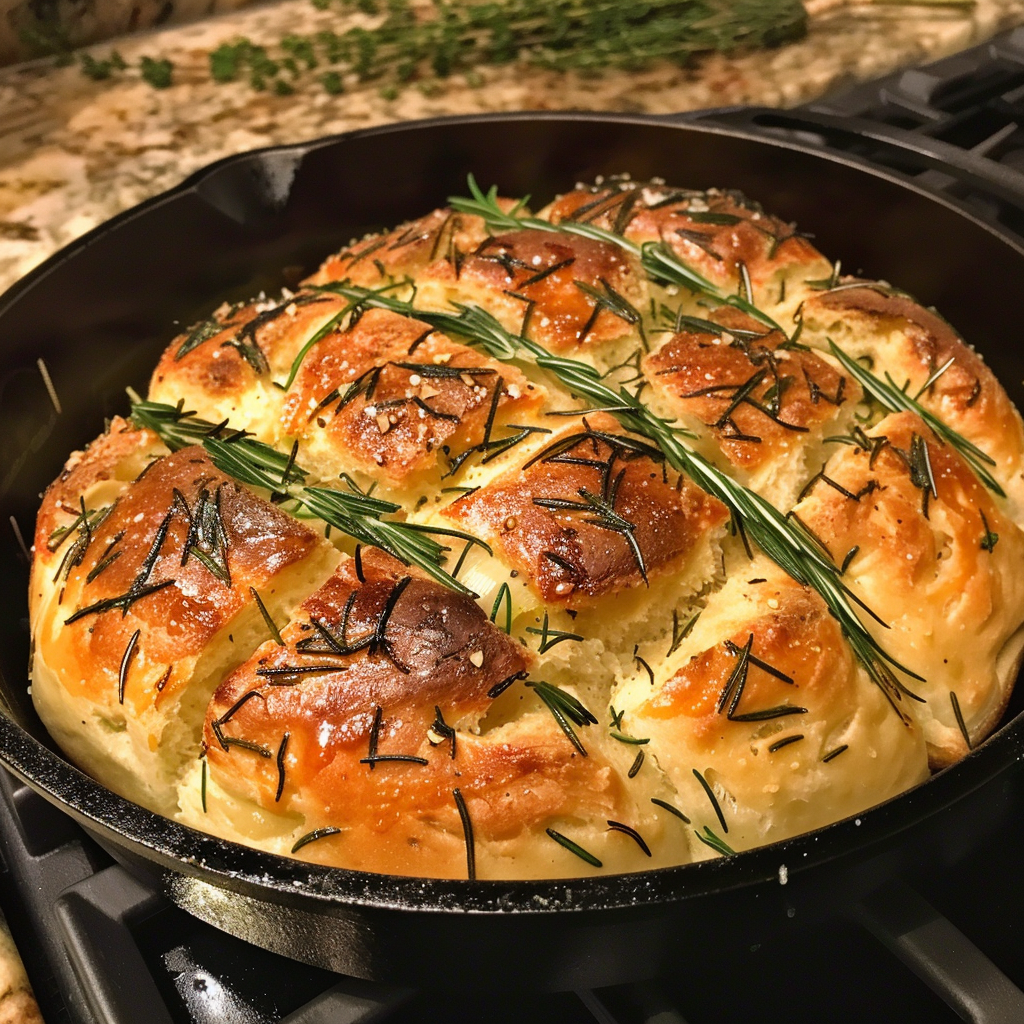
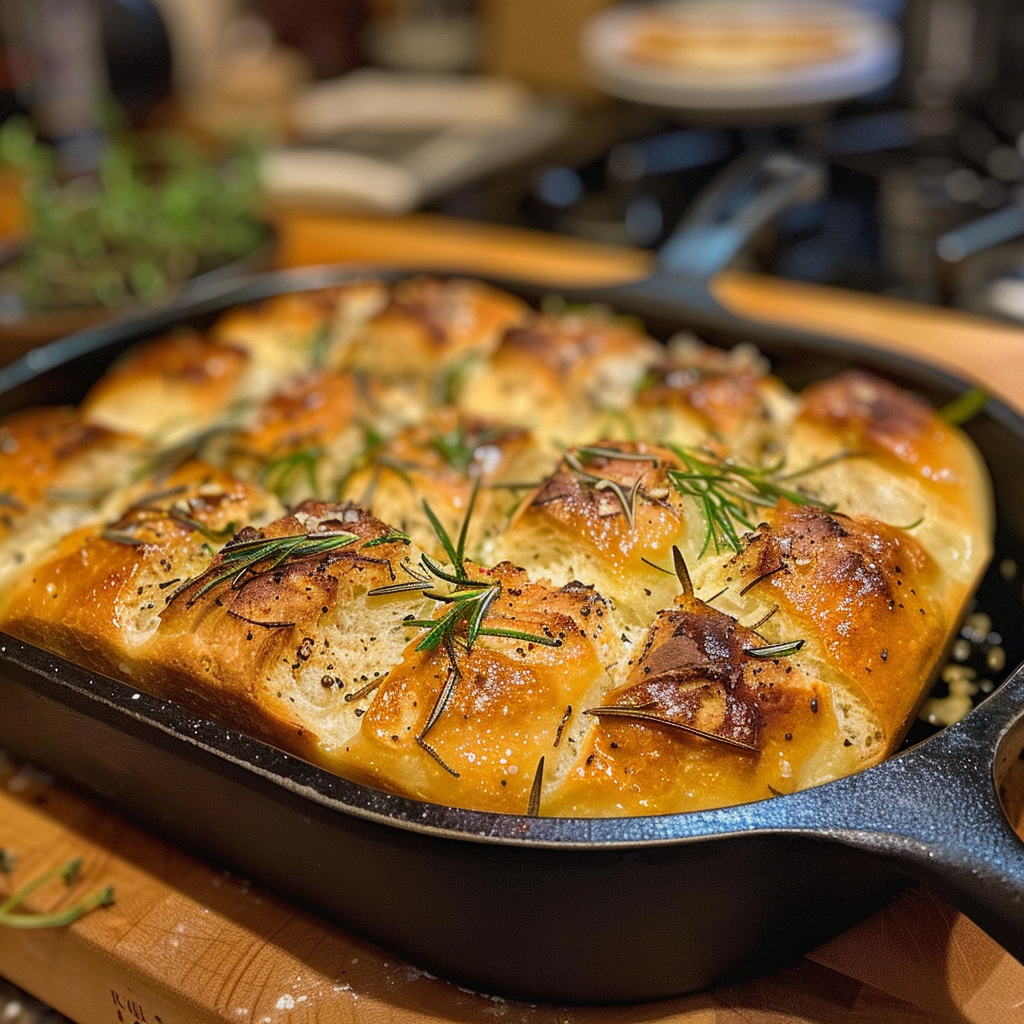
The beauty of rosemary cast iron bread lies in its balance of texture and taste. The cast iron skillet gives it a hearty, crispy crust while locking in heat for even baking. Inside, the bread stays fluffy and moist, with just the right chew. When you bite into it, you’re greeted with a burst of garlic’s savory punch mellowed by rosemary’s earthy notes.
Essential Ingredients for Rustic Garlic Rosemary Skillet Bread
Every good loaf starts with the right building blocks. The beauty of rustic garlic rosemary skillet bread is that it needs only a handful of pantry staples, yet it delivers bakery-level flavor and texture.
Core Ingredients
- Flour – All-purpose flour works beautifully, but you can mix in bread flour for extra chew.
- Yeast – Active dry yeast is the go-to, though instant yeast works if you adjust rise time.
- Warm water – Not too hot, not too cold. Around 105–115°F is perfect for activating yeast.
- Olive oil – Adds moisture and helps create that rustic crust.
- Fresh garlic – The star of the show. Minced or roasted, garlic infuses the bread with irresistible flavor.
- Fresh rosemary – Earthy, aromatic, and absolutely essential. Use finely chopped sprigs for the best taste.
- Salt – Enhances every other ingredient, balancing flavors beautifully.
Optional Flavor Boosts
Want to add a little twist to your artisan garlic rosemary bread? Try these optional add-ins:
- Grated Parmesan or Asiago cheese for a salty bite
- Crushed red pepper flakes for subtle heat
- Roasted garlic cloves for a sweeter, mellow note
- Chopped olives or sundried tomatoes for a Mediterranean touch
Tools You’ll Need
Making skillet garlic bread doesn’t require fancy gadgets. Just a few reliable kitchen tools:
- A cast iron skillet – It’s non-negotiable if you want that crisp, golden crust.
- A mixing bowl – For bringing ingredients together.
- A wooden spoon – Perfect for stirring the sticky dough.
- A proofing towel – Keeps your dough covered while it rises.
- A cooling rack – Helps prevent a soggy bottom after baking.
Step-by-Step Rustic Garlic Rosemary Skillet Bread Recipe
Baking rustic garlic rosemary skillet bread is simpler than it looks. Just follow these steps, and you’ll have a golden, aromatic loaf ready to impress.
Preparing the Dough
Start by mixing warm water, yeast, and a pinch of sugar in a bowl. Let it sit for about 5 minutes until foamy. Stir in flour, salt, olive oil, and most of the rosemary and garlic. Mix with a wooden spoon until a sticky dough forms.
First Rise
Cover the bowl with a towel and let the dough rest for 1–2 hours, or until it doubles in size.
Shaping and Adding Flavor
Punch the dough down lightly, then fold it a few times to shape it. Transfer into a greased cast iron skillet. Sprinkle the remaining garlic and rosemary on top for that signature rustic flavor.
Baking to Perfection
Preheat your oven to 400°F (200°C). Bake for 30–40 minutes until the crust turns golden brown and sounds hollow when tapped.
Cooling and Serving
Allow your artisan garlic rosemary bread to cool on a rack for at least 10 minutes. Slice, serve, and enjoy the crackling crust with its fluffy, fragrant inside.
Variations of Rustic Garlic Rosemary Skillet Bread
One of the best things about rustic garlic rosemary skillet bread is how easy it is to customize. The base recipe is simple, but with a few creative twists, you can turn it into something entirely new.
Cheese-Infused Skillet Bread
Mix in shredded Parmesan, Asiago, or mozzarella before the first rise. The cheese melts into the dough, giving your artisan garlic rosemary bread a salty, savory kick.
Whole Wheat or Multigrain Version
Swap half the all-purpose flour with whole wheat or multigrain flour. It adds nuttiness, boosts fiber, and creates a heartier loaf that still pairs well with soups and stews.
Roasted Garlic & Caramelized Onion Upgrade
Instead of just raw minced garlic, roast whole cloves until golden and sweet, then fold them into the dough along with caramelized onions. This creates a richer, more complex flavor.
Mediterranean Twist
Chopped olives, sundried tomatoes, or even a sprinkle of oregano transform skillet garlic bread into a Mediterranean-style loaf that tastes amazing with hummus or fresh salads.
No matter which variation you choose, the result is always a warm, rustic loaf that feels like it came straight from an artisan bakery.
Frequently Asked Questions About Rustic Garlic Rosemary Skillet Bread
Can I make rustic garlic rosemary skillet bread without yeast?
Yes! You can swap yeast with baking powder for a quick bread version. It won’t be as airy, but you’ll still enjoy a flavorful loaf.
Can I use dried rosemary instead of fresh?
Absolutely. Fresh rosemary is more aromatic, but dried works too. Use about one-third of the amount since dried herbs are stronger.
How do I get a crispier crust?
Bake your skillet garlic bread in a preheated cast iron pan. For extra crunch, lightly mist the dough with water just before baking.
What size skillet should I use?
A 10–12 inch cast iron skillet is perfect. Smaller skillets make taller loaves, while larger pans give a thinner, flatter bread.
Can this bread be made ahead of time?
Yes, you can prepare the dough, refrigerate overnight, and bake the next day. The slow rise deepens the flavor of your artisan garlic rosemary bread.
Is this bread freezer-friendly?
It sure is. Wrap slices tightly, freeze, and reheat in the oven for a just-baked taste.
Hungry for more? Visit our website for full recipes and follow us on Pinterest for daily foodie inspo you’ll love to pin!