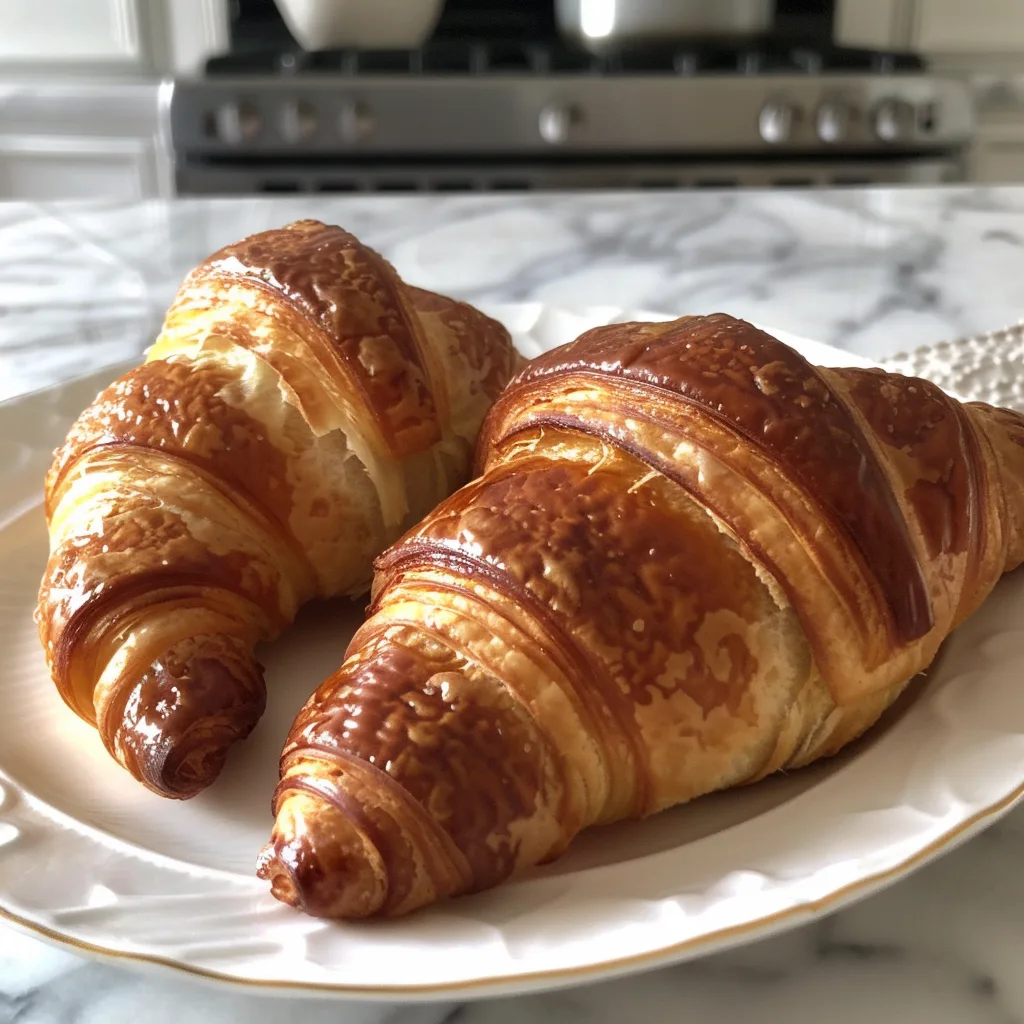
If you’ve ever wondered whether you can actually make real-deal gluten free croissants at home, this recipe proves you totally can—and they’re pretty easy once you know the steps. These croissants come out rich, buttery, flaky on the outside, and tender on the inside. You’ll find detailed instructions, helpful photos, and expert tips to guide you from dough to golden bake.
Why this gluten free croissant works
Classic croissants get their structure and layers from laminated, yeasted dough. We’re doing the same thing here—but with gluten free flour, xanthan gum, and cold butter, you’ll still get dozens of crisp butter layers that puff up in the oven. It may feel fancy, but once you follow the sequence, it’s straightforward. Just don’t rush—patience pays off here.
Table of Contents
Ingredients and equipment you need
Ingredients (makes about 8–10 croissants):
- 2¼ cups (≈315 g) gluten free pastry flour (like Cup4Cup or custom blend)
- 2 tsp instant yeast
- 2 Tbsp sugar
- 1 tsp salt
- 3 Tbsp unsalted butter, melted and cooled
- ¾ cup whole milk, room temp
- 16 Tbsp (≈225 g) cold unsalted European-style butter
- ¼ cup gluten free flour (for dusting/shaping)
- 1 egg + 1 Tbsp water (egg wash)
Equipment:
- Rolling pin, large bowl, plastic wrap, parchment paper
- Pastry cutter or pizza wheel
- Baking sheets, brush
Step-by-step: to make a gluten free croissant
1. Make the dough
Mix flour, yeast, sugar, and salt. Add melted butter and milk, stir until combined. Roll into a round, wrap, and chill while you prep the butter packet.
2. Prepare the butter packet
Sprinkle parchment with flour, layer the butter into a slab, dust with more flour. Pound and roll into a ~5″ square, then chill until firm.
3. Enclose and laminate
Roll dough out briefly, place butter packet in center, fold dough like a present. Roll into a rectangle, fold in thirds, wrap, and chill 4 hours (or overnight). (Optional: add series of 4–5 turns with 30 min chill between each for extra layers.)
Shape, proof, and bake the croissants
4. Cut & shape
Roll dough to ¼” thick. Cut rectangles, slice diagonally into triangles. Roll from base to tip, stretching slightly and tucking tip underneath. Arrange seam-side down, 2” apart.
5. Proof & bake
Let croissants rise in a warm (75–80 °F), humid spot until nearly doubled (90–120 min). Brush with egg wash. Chill 10 min in fridge before baking. Bake in a preheated 400 °F oven for 18–22 min until deep golden brown and beautifully flaky.
Tips & tricks for success
- Cold is key. Keep butter and dough between 50–60 °F. Chill as needed to prevent melting.
- Use a pastry wheel. Sharp edges = crisp layers.
- Turn count matters. You can do 3 or up to 5 “turns”—more turns, more flakiness.
- Don’t rush proofing. Let them puff fully—you’ll taste the difference.
- Splurge on European butter. It’s richer and gives a better lift and flavor.
How to store and freeze gluten free croissant
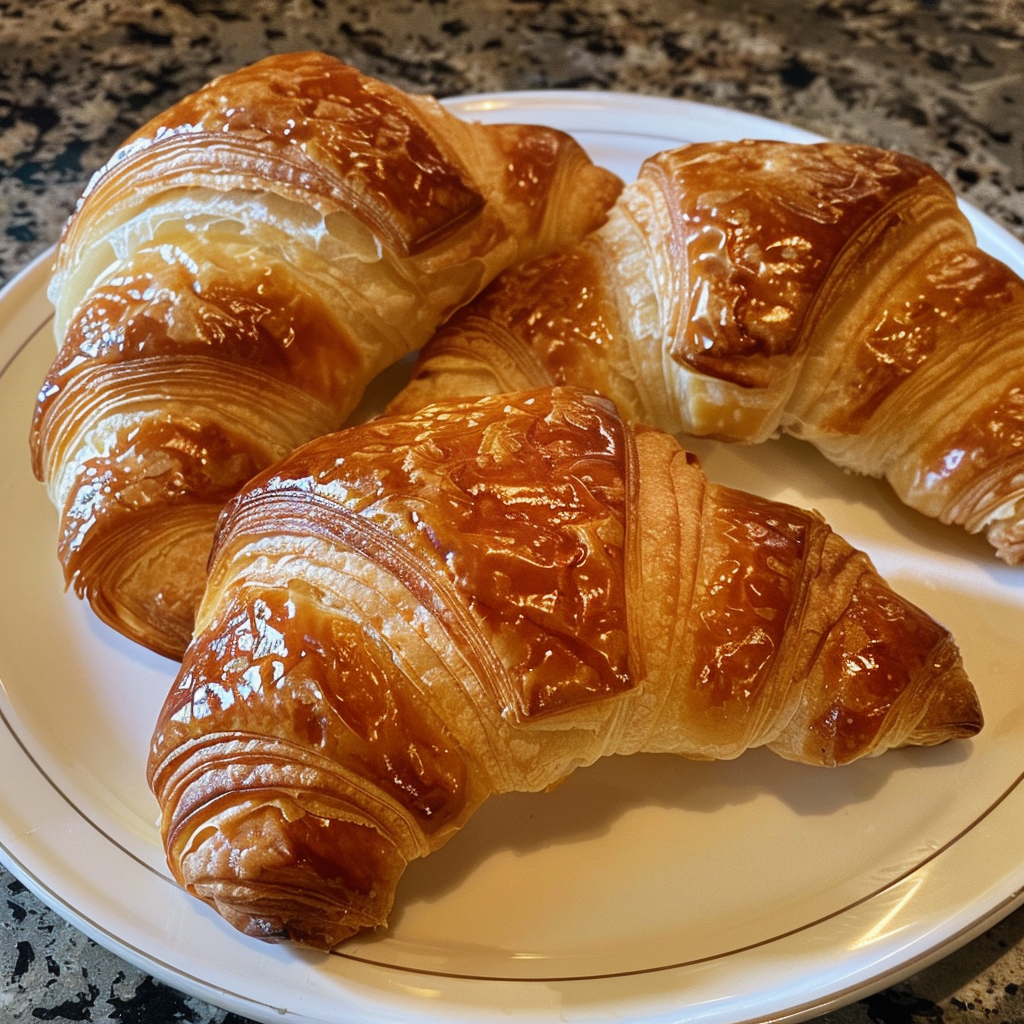
Store cooled croissants at room temperature in an airtight container for 2–3 days. To refresh day-old ones, microwave for 10–15 sec or warm gently in the oven.
Want to freeze extras? Cool completely, freeze in a single layer on a sheet pan, then transfer to freezer bags. To reheat: thaw overnight or at room temperature, then warm them at 350 °F for 5–7 min.
Substitutions
- Dairy-free: Use coconut milk powder instead of dry milk. Swap whole milk with almond/coconut milk. Try Earth Balance or Melt vegan butter.
- Egg-free: Replace egg wash with melted butter or vegan butter.
- Vegan: Use both dairy-free and egg-free swaps above.
Conclusion
Baking gluten free croissants is more than a recipe—it’s a craft. With patience, precision, and the right ingredients, you can transform your kitchen into a little gluten-free bakery. From combining the perfect flour blend to mastering the three turns and achieving that golden bake, you’ve learned how and why each step works. Now it’s your turn to practice, adapt, and enjoy the delicious outcome: a tender, flaky, buttery croissant that everyone—gluten-free or not—will love.
For more Delicious Recipes visit my website and pinterest
Is a gluten free croissant possible?
Absolutely. With the right flour blend, xanthan gum, chilling, and lamination, you’ll get flaky buttery layers just like a traditional croissant.
Does French croissant have gluten?
Yes—unless labeled gluten free, croissants made in France use wheat flour and are not safe for those avoiding gluten.
Does Paris have gluten free croissants?
Yes! Bakery spots like Helmut Newcake and some vegan pâtisseries offer dedicated gluten free croissants. Just ask about cross-contamination.
Are macarons gluten free?
Yes—traditional French macarons are made from almond flour, egg whites, and sugar, making them naturally gluten free, barring any added fillings with gluten.