introduction
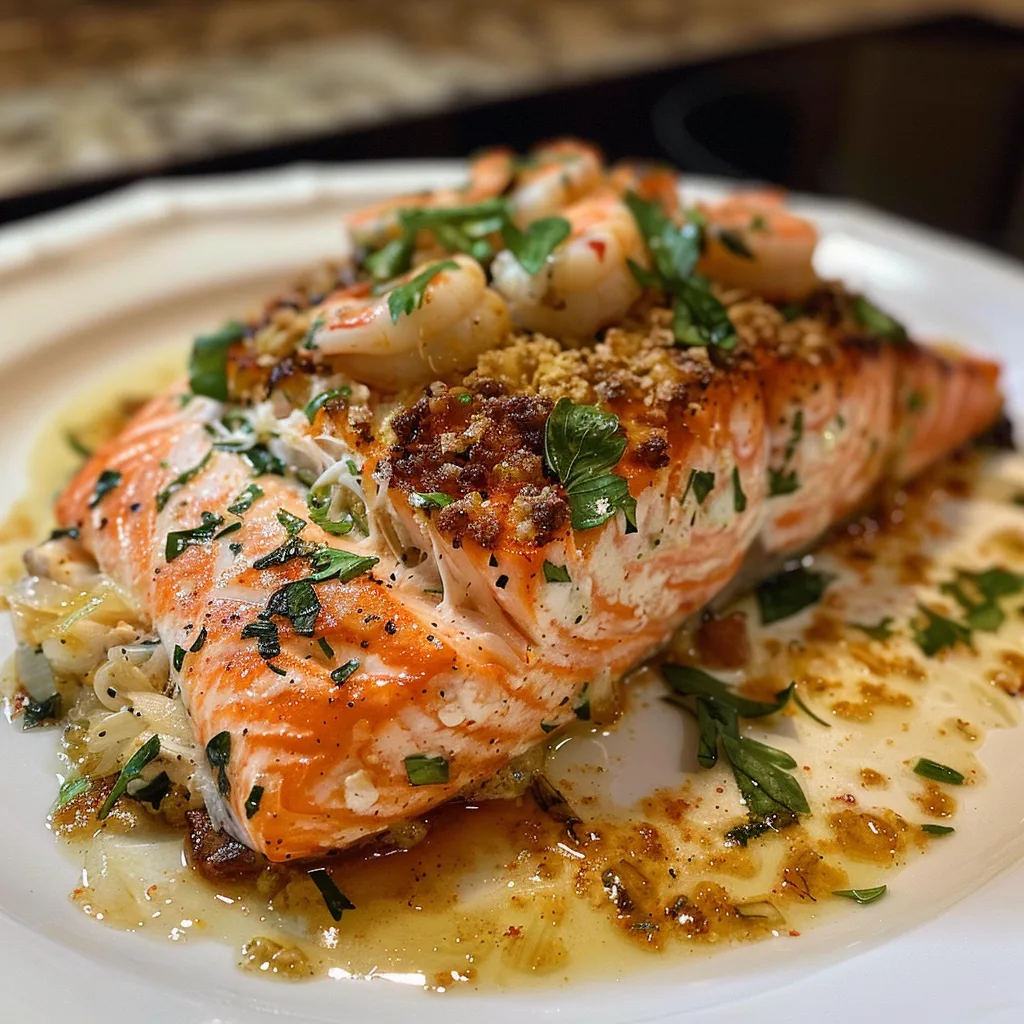
When you think of decadent yet doable seafood dishes, Crab and Shrimp Stuffed Salmon should top your list. This dish blends the rich flavors of fresh salmon, sweet crab meat, and tender shrimp with a creamy herb stuffing that’s hard to resist.
Whether you’re cooking for a cozy family dinner, celebrating a special night, or just craving something different, this recipe turns any occasion into something memorable. Even better? It’s surprisingly simple to whip up, looks elegant on the plate, and delivers restaurant-quality flavor at home.
In this article, you’ll get a full breakdown of how to make the best crab and shrimp stuffed salmon, plus smart cooking tips, health benefits, FAQs, and ideas to customize the dish. Ready to make a showstopper?
Key Ingredients for Crab and Shrimp Stuffed Salmon
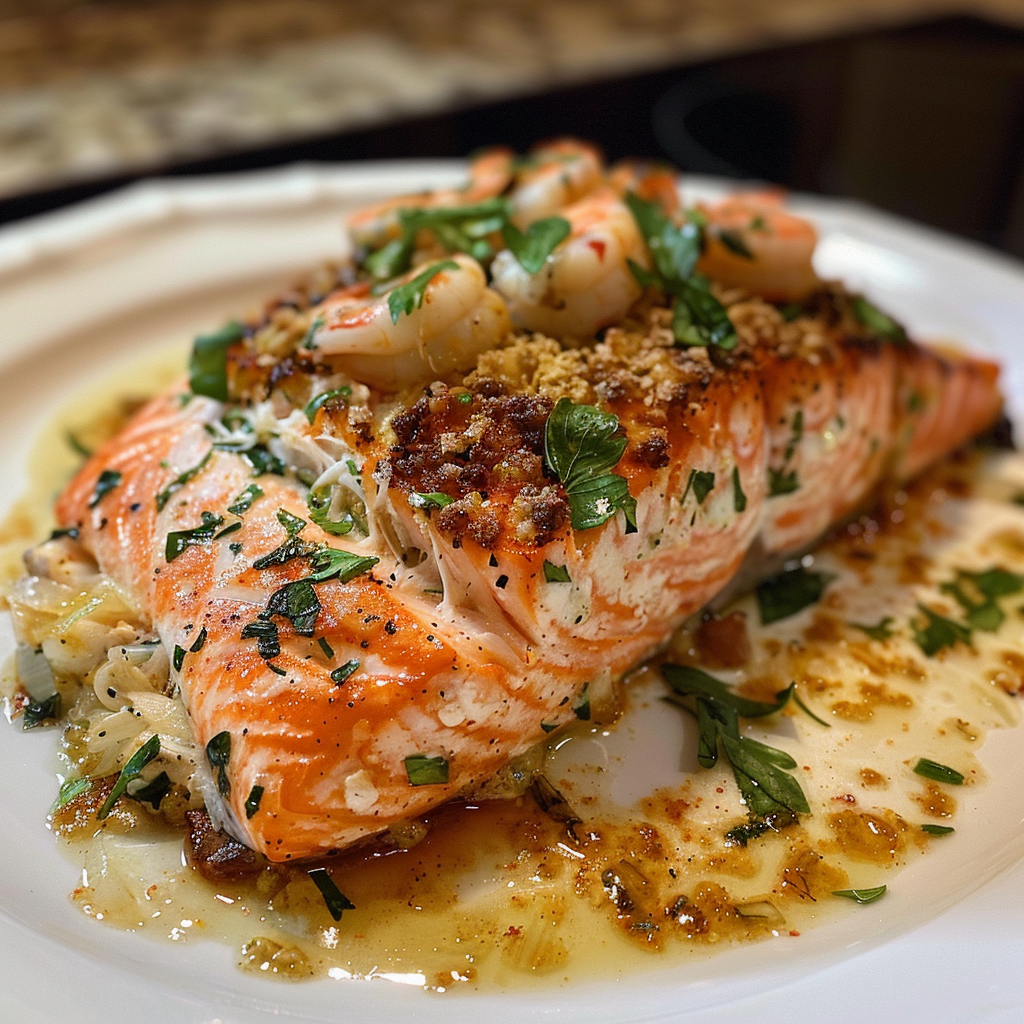
The beauty of Crab and Shrimp Stuffed Salmon lies in its simplicity and the quality of its ingredients. Every component brings something special to the table—flavor, texture, or nutrition. Choosing the right ingredients can turn your dish from just “good” to unforgettable.
Salmon: The Star of the Show
Let’s start with the obvious—salmon fillets. Always aim for wild-caught salmon if possible. It’s richer in omega-3 fatty acids, more flavorful, and generally more sustainable than farmed options.
- Filet size: Go for thick cuts (about 1.5–2 inches) so there’s room to stuff or layer the filling.
- Skin-on or skinless? Either works, but skinless is easier to slice and serve neatly.
Not sure which salmon is the healthiest? The folks over at Seafood Watch offer helpful guidelines for choosing sustainable fish that’s good for both your body and the planet.
Crab Meat: Sweet, Delicate, and Delicious
Crab is what gives the stuffing that soft, sweet bite. For the best flavor:
- Use jumbo lump crab meat or Dungeness crab if available. They’re more flavorful and hold their shape well.
- Avoid overly shredded or canned crab, as it tends to be mushy and fishy.
If you’re watching your budget, quality pasteurized crab in a can (look for ones kept in the refrigerated section) is still a solid backup.
Shrimp: Juicy and Tender
Adding shrimp to the mix gives the stuffing another layer of seafood goodness.
- Bay shrimp are ideal—they’re small, tender, and mix well.
- If you use larger shrimp, just chop them up into bite-sized pieces.
- Make sure to devein and season them before lightly sautéing for extra flavor.
And don’t skip pre-cooking them a little—it keeps the texture just right after baking.
Creamy Components: Cheese Makes It Better
Here’s where the magic happens. To hold everything together and add that irresistible richness, a combo of cream cheese and shredded mozzarella works wonders.
- Cream cheese adds a tangy base and helps bind the seafood.
- Mozzarella or Parmesan gives it a cheesy pull and depth.
- Want a fancy twist? Try brie or goat cheese for a more elevated flavor.
Lactose intolerant? No worries. There are plenty of dairy-free cream cheese alternatives that melt like a dream.
Herbs and Seasonings: Freshness in Every Bite
Don’t underestimate the power of seasoning! A good mix of herbs can transform your stuffed salmon from basic to gourmet.
- Fresh parsley and green onions add brightness and texture.
- Garlic gives a warm, savory edge—minced or roasted.
- Old Bay seasoning? A must. It blends perfectly with seafood.
- Paprika, onion powder, and lemon juice round things out with zing.
If you don’t have Old Bay, mix a little celery salt, paprika, and pepper for a DIY version.
Lemon Butter Sauce: The Finishing Touch
You could stop at stuffing, but the real MVP might just be the lemon butter sauce drizzled on top.
- Made with lemon juice, butter, shallots, and cream, this sauce adds velvety texture and a punch of citrus that lifts the whole dish.
- It’s creamy but not heavy—great for keto or low-carb diets.
Need to go dairy-free? Sub in coconut cream or even olive oil for a light, tangy finish.
Step-by-Step: How to Make Crab and Shrimp Stuffed Salmon
You’ve got your fresh salmon, crab, shrimp, herbs, and cheeses—now it’s time to bring them all together in this juicy, creamy, flavor-packed dish. Follow these simple steps, and in under an hour, you’ll have a meal that looks—and tastes—like it came straight from a coastal restaurant kitchen.
Prepping the Seafood Like a Pro
Before anything else, make sure your seafood is clean, seasoned, and ready for stuffing.
Prep the Salmon Fillets
- Pat the salmon fillets dry with paper towels.
- Using a sharp knife, slice a pocket lengthwise down the center of each fillet—don’t slice all the way through!
- Season each fillet inside and out with salt, pepper, and a sprinkle of Old Bay seasoning.
Pro tip: Use thick fillets so they hold the stuffing better and cook evenly.
Pre-Cook the Shrimp
- In a skillet over medium heat, melt 1 tablespoon of butter.
- Toss in minced garlic and paprika. Stir for 30 seconds so the garlic doesn’t burn.
- Add chopped shrimp, season with a pinch of salt and pepper, and sauté for 2–3 minutes. They should just turn pink and slightly firm—not fully cooked.
This quick step locks in flavor and prevents watery stuffing.
Making the Creamy Seafood Stuffing
Here’s where all that deliciousness comes together.
Combine the Filling
- In a large mixing bowl, add:
- 4 oz cream cheese (softened)
- 1/4 cup chopped parsley
- 2 tablespoons chopped green onions
- 1 tablespoon fresh lemon juice
- Gently stir until smooth.
Next, fold in the pre-cooked shrimp, lump crab meat, mozzarella cheese, a pinch of Old Bay, onion powder, and paprika. Mix just enough to combine. Don’t overmix—you want some texture in each bite.
Optional add-in: A few chunks of brie or grated Parmesan for a more indulgent feel.
Stuffing and Assembling the Salmon
This is the fun part!
Fill and Stack
- Carefully spoon the stuffing into the salmon pockets or layer it between two fillets like a sandwich.
- Press lightly so the stuffing holds, but don’t pack it too tight.
Got leftover stuffing? Save it for the topping mid-bake—it adds a golden crust!
Baking to Perfection
Now it’s time to bake that beauty.
Oven Tips
- Preheat your oven to 350°F (175°C).
- Place the stuffed salmon in a lightly greased oven-safe pan.
- Dot the top with a pat of butter for added richness.
- Bake for 20 minutes. Then, open the oven, spread more stuffing on top, and broil for an additional 4–5 minutes to brown it slightly.
Internal temperature should reach 135°F—that’s the sweet spot for flaky, moist salmon.
Need a quick food safety check? Refer to FDA’s safe cooking temps for more details.
Make the Lemon Butter Sauce While It Bakes
While your salmon is sizzling in the oven, whip up a velvety lemon butter sauce to elevate the dish even more.
How to Make It
- In a small saucepan, combine:
- 1 tbsp lemon juice
- 1 tbsp minced shallot
- 1/2 cup heavy cream
- Simmer over medium heat until it thickens (about 4–5 minutes).
- Remove from heat and whisk in cold butter, one piece at a time, until smooth.
Drizzle the sauce over the salmon just before serving for an extra burst of flavor.
Tasty Variations of Crab and Shrimp Stuffed Salmon
If you’re the kind of home cook who loves to switch things up, Crab and Shrimp Stuffed Salmon is a goldmine of opportunity. While the classic recipe is already packed with flavor, there are countless ways to tweak it to suit your taste, dietary needs, or just what’s in your fridge.
Below are some exciting spins on this seafood masterpiece that’ll keep your menu fresh, fun, and family-approved.
Cheesy Crab and Shrimp Stuffed Salmon Twists
Let’s start with the cheese—because honestly, who doesn’t love a little melty magic?
Swap the Cheese
- Replace cream cheese with brie or goat cheese for a tangier, fancier feel.
- Add shredded smoked gouda or fontina for deeper, meltier richness.
- Want to skip dairy? Use a plant-based cream cheese and a sprinkle of nutritional yeast for that savory “cheesy” vibe.
Each swap brings a new personality to the dish—and hey, sometimes even the most unexpected combos become your go-to favorite.
Cajun-Style Stuffed Salmon With a Kick
If you like bold flavors, you’ve got to try the Cajun stuffed salmon version.
Spice It Up
- Add chopped andouille sausage to the stuffing for smoky depth.
- Mix in Cajun seasoning, cayenne pepper, or a splash of hot sauce.
- Garnish with chopped green onions and roasted red peppers.
The result? A spiced-up, southern-inspired seafood dish that wakes up your taste buds.
Low-Carb & Keto-Friendly Version
Looking to keep it low-carb without sacrificing flavor? You’re in luck—Crab and Shrimp Stuffed Salmon already fits the bill. But with a few extra tweaks, it becomes keto superstar status.
Keep It Clean
- Skip the breadcrumb topping or creamy sauces with flour.
- Pair it with cauliflower mash instead of potatoes.
- Add more healthy fats with a butter drizzle or avocado side salad.
This version isn’t just delicious—it’s perfect for anyone following a clean-eating or keto lifestyle. If you’re curious about how salmon supports a healthy diet, this Healthline article breaks it all down beautifully.
Asian-Inspired Fusion Salmon
Yes, fusion food is still in—and it totally works here.
Add Asian Flair
- Use a soy sauce–based glaze instead of lemon butter.
- Add a touch of grated ginger, sesame oil, and green onions to the stuffing.
- Garnish with black sesame seeds or a drizzle of garlic-chili oil.
The combo of umami-packed flavors and silky salmon is a fusion dream come true.
Mediterranean Stuffed Salmon with Feta & Herbs
Craving something bright and herbaceous? Go Mediterranean style.
Go Fresh & Zesty
- Mix crumbled feta, chopped spinach, sun-dried tomatoes, and parsley into the stuffing.
- Add lemon zest and a pinch of oregano or za’atar.
- Drizzle with a light olive oil–lemon dressing before serving.
This lighter take still delivers big on flavor, and it’s a great way to sneak more greens onto your plate.
Budget-Friendly and Kid-Friendly Alternatives
Sometimes, we just need a version that’s easy on the wallet and picky-eater approved.
Make It Simple
Let the little ones help stuff and season—it’s a great way to get them involved in healthy cooking.
Use canned crab and frozen shrimp—just be sure to drain and thaw properly.
Swap salmon for tilapia or cod fillets if needed (especially if cooking for kids).
Frequently Asked Questions About Crab and Shrimp Stuffed Salmon
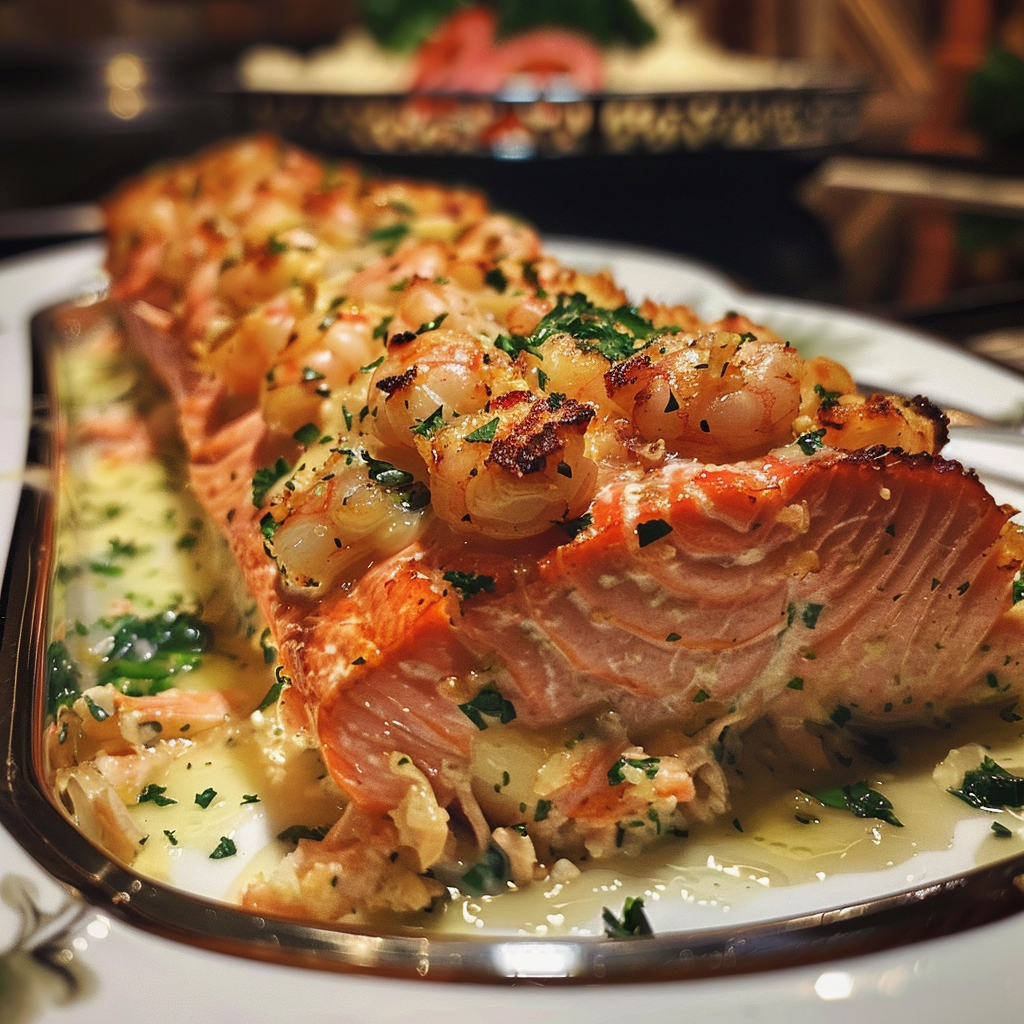
Whether you’re a first-timer or a seasoned home cook, it’s normal to have a few questions about making Crab and Shrimp Stuffed Salmon. Below, we’ve answered the most commonly searched queries to make sure your salmon turns out perfectly every single time.
Can I make the seafood stuffing ahead of time?
Absolutely, yes. You can prepare the shrimp and crab stuffing up to 24 hours in advance. Just keep it covered in an airtight container in the refrigerator.
When you’re ready to use it, let the filling sit at room temperature for about 15 minutes so it’s easier to stuff into the salmon and heats evenly in the oven.
What type of crab meat is best for stuffed salmon?
The best crab meat for stuffed salmon is jumbo lump crab or Dungeness crab. These options are firm, sweet, and hold up well during baking. If you’re on a budget, high-quality canned crab works, but be sure to drain it completely to avoid watery stuffing.
Do I need to cook the shrimp before stuffing it into the salmon?
Yes, and here’s why: shrimp releases moisture when it cooks. By giving it a quick sauté beforehand, you avoid a soggy stuffing. Plus, pre-cooked shrimp adds more depth of flavor.
Keep it simple—just season lightly and cook for 2–3 minutes until pink. Then, mix it into your creamy seafood blend.
Can I use frozen salmon fillets?
You sure can! Just make sure to fully thaw them in the fridge overnight and pat them dry before cutting or stuffing. Excess moisture can affect how the salmon bakes and how well the filling stays inside.
How do I know when the stuffed salmon is fully cooked?
Use a food thermometer! The ideal internal temperature for perfectly cooked salmon is 135°F. At this temp, the fish is tender and flaky, and the stuffing is hot all the way through.
If you don’t have a thermometer, check that the salmon flakes easily with a fork and is opaque in the center.
For more food safety tips, check out this guide from the FDA on safe cooking temperatures.
What’s the best way to reheat leftover stuffed salmon?
Reheating salmon can be tricky—overdo it, and you’ll dry it out. Here’s the best method:
- Preheat your oven to 350°F.
- Place the stuffed salmon in a baking dish.
- Add a splash of broth or lemon juice to keep it moist.
- Cover with foil and bake for 10–15 minutes until warmed through.
Avoid using a microwave unless you’re in a hurry—it tends to overcook the fish and turn it rubbery.
Can I freeze crab and shrimp stuffed salmon?
Yes, but with a catch. It’s best to freeze the stuffed, uncooked salmon rather than leftovers. Wrap each portion tightly in plastic wrap and then foil, and freeze for up to 2 months. When ready to cook, thaw overnight in the fridge before baking.
What other fish can I stuff if I don’t have salmon?
If salmon isn’t available or you’re just craving something different, try:
- Cod – mild, flaky, and easy to stuff
- Tilapia – budget-friendly and light
- Mahi-Mahi – holds stuffing well and has a firmer bite
Just make sure the fillets are thick enough to create a pocket or layer.